Small Underground Houses
Since underground homes are very energy-efficient, it follows
that small underground houses consume even less energy and are
cheaper to light, heat and cool (And they are not just for Hobbits).
Since the temperature is moderate nearly year round, you won't
have to worry about soaring energy costs. Whether you use a storage
container or build your small home into the side of a hill, you
can enjoy having enough space to live in without taking up a big
hole in the environment.
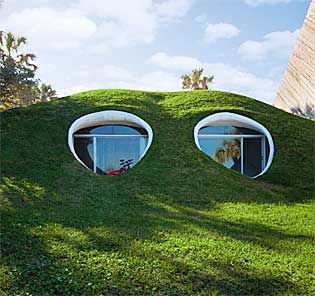 small underground houses
 |
|
Underground homes are usually fairly inexpensive to build, if
you have the materials and equipment you will need. As far as
power is concerned, you may opt to build a solar electric system.
It will run the basic electric appliances in your house and give
you hot water for heating, cleaning and bathing.
A smaller home will allow you to get by with some smaller appliances,
if you're concerned about your carbon footprint. Select the most
efficient models of refrigerators and other appliances available.
Heating is a major concern if you live in an area with cold winters.
Your home will pick up excess heat from your appliances, cooking,
lighting and simple body heat in a small area.
Passive solar systems work well for any underground home, but
most especially for smaller homes. The sun heats the thermal mass
most directly, and your mass may be made up of concrete walls,
floors or blocks, rocks or water barrels.
Need to Vent ...
Your home will also need a complete ventilation system, since
you'll need to move air through this smaller living space. If
you heat and perhaps cook with a small sized wood stove, a five
volt fan can be run within a fresh air duct to efficiently vent
the heater.
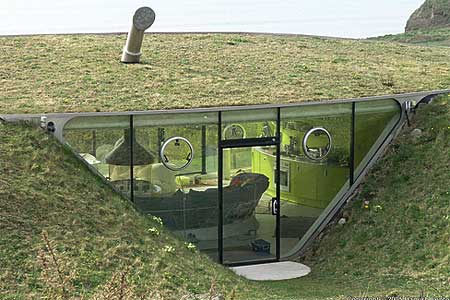
Your main structure in a smaller underground home may have a
reinforced concrete roof, used on top of earth or concrete walls.
This differs if you're building with a storage container. Your
underground living space can open out to a sunken courtyard and
a largely subterranean greenhouse. This gives your little home
the air and light that it needs.
If you want your house to be off the grid, collect rainwater in
tanks near your greenhouse, where you can grow your own foods.
Placing the tanks higher than the faucets of your home will allow
gravity to work for you in providing natural water pressure. Your
greenhouse roof can act as a water collector and using a rain
gutter, you can divert the water to your tank. Use filters and
valves to keep debris out of your tank.
Solar panels can be placed wherever they will work most optimally,
making sure they are open to sun for the peak periods. The rest
of your off-the-grid system can be set up in your utility area.
Your small house itself will protect you from earthquakes, fires,
hurricanes and tornadoes. Many perils that are posed to above
ground homes will not bother your underground home.
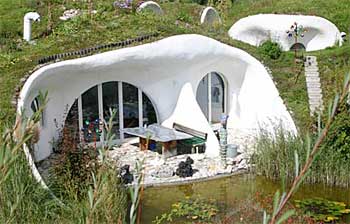
Soiling Your Home ...
Dirt is cheap, but if you are looking toward a worst case scenario,
concrete, lead and steel provide much better protection against
radiation. For whatever reason you decide to move underground,
you certainly don't need a spacious mansion to live comfortably.
Smaller homes give you all the creature comforts without having
to heat or cool or vent a lot of unneeded space.
|